Top CPR Training Manikins in Canada: A 2026 Buyer’s Guide
If you run courses in Canada, you already know the difference a good manikin makes. Teaching CPR well is half technique and half feedback, so your equipment needs to reinforce what your voice and hands already show. Over the past five years, feedback technology has matured, consumable parts have become easier to source domestically, and instructor bundles now fit a wider range of budgets. The short answer: you can equip a classroom for less than you could in 2019, and still get reliable compression metrics, realistic chest recoil, and practical ventilation cues.
The longer answer is where this guide earns its keep. Below you will find how to judge quality beyond a spec sheet, which models have held up through heavy Canadian training seasons, what to expect for consumable costs, and how AED trainers and instructor bundles fit into a coherent kit. Prices and availability are discussed in ranges and with context, since they move with exchange rates and shipping. Everything here is grounded in what instructors are actually buying and maintaining in Canada.
What really matters when teaching CPR in 2026
Standards from the Heart and Stroke Foundation of Canada and the Canadian Red Cross continue to align with international guidance on compression depth, rate, chest recoil, and ventilation volumes. Most recognized manikins now provide objective feedback on at least rate and depth, while higher tiers add metrics for recoil and hand position. In practice, these are the features that change student performance within a single class:
- Real-time feedback the student can read without stopping. A chest light band, a simple clicker that correlates with depth, or a Bluetooth-connected app that shows rate and recoil. Any of these can work, but students fix errors fastest when they see a clear target indicator while compressing.
- Chest mechanics that reward proper depth and recoil. Stiff springs hide poor form, while loose torsos mask shallow compressions. The better manikins have a progressive spring that stiffens at appropriate depths, with a perceptible bottom-out.
- Cleanability that matches your throughput. If you train 60 students in a day, you need quick-change airways or washable faces that turn over in under a minute without tools. After 2020, most programs adopted stricter disinfection routines; equipment that tolerates frequent wipedowns with hospital-grade solutions will last longer.
- Consumables and parts support within Canada. Lungs, valves, and face shields should be stocked by Canadian distributors year round. In winter, shipping delays are a reality. I look for vendors that keep spares in-country and provide bilingual instructions and labels.
- Portability and setup time. For mobile instructors, a 10-student class can mean 6 to 8 cases. If the bag doubles as a mat, and torsos click together without fiddling, you save 15 minutes per session.
The trade-offs are familiar. High-end feedback systems tell you exactly what a student is doing wrong, but can raise your per-unit cost and your battery management overhead. Lightweight torsos pack easily but may need airway replacements more often. The good news: you do not have to buy the most expensive line to meet Canadian training requirements.
The 2026 landscape in Canada
Availability has improved compared with the supply hiccups of 2021–2023. Most mainstream distributors in Canada carry Prestan, Laerdal, Ambu, and Brayden lines with steady stock. Typical price bands in CAD, as of early 2026:
- Budget adult torsos with basic feedback: roughly 190 to 320 each when purchased in 4-packs or 6-packs.
- Mid-tier adult manikins with app-based or light-band feedback: roughly 320 to 520 each in bundles, 450 to 650 individually.
- High-fidelity adult torsos with advanced feedback and more realistic chests: in the 900 to 1,600 range per unit.
- Infant and child models are usually 10 to 30 percent less than the adult in the same family, except for high-end infant systems that can equal adult pricing.
AED training equipment in Canada tracks a similar pattern: well under 300 for basic AED trainers, 350 to 600 for brand-specific trainers that mirror live devices, and 600 to 1,000 for multi-language, scenario-rich units with swappable electrode pads.
Instructor packages that combine 4 to 10 manikins, lungs or valves, an AED trainer, and a carry bag often shave 10 to 20 percent off piecemeal buys. Look for packages listed specifically for “CPR instructor packages Canada” or “Emergency training equipment Canada” to ensure consumables and power adapters are the Canadian variants.
Quick picks based on common use-cases
- Multi-site instructor who needs durable, fast-setup torsos: Prestan Professional Series Adult with feedback, paired with the matching infant set. They travel well, tolerate hundreds of compressions daily, and the clicker sound still helps novices.
- Fixed training centre seeking richer metrics and quieter rooms: Laerdal Little Anne QCPR for adults and Baby Anne or Resusci Baby QCPR for infants. The QCPR app gives clear targets and works in bilingual settings.
- Programs that emphasize visible learning: Brayden Pro Adult with perfusion LED path. The lights teach recoil and depth without the instructor saying a word.
- Budget-focused community courses and corporate refreshers: Actar 911 or other lightweight budget torsos for basic practice, then pair at least one higher-feedback torso per small group for calibration.
- Academic and healthcare settings that want realism and data logs: Laerdal Resusci Anne QCPR with SimPad or app integration. It is pricey, but the chest mechanics and reporting stand out.
Deep dive: adult manikins that have earned their place
Prestan Professional Adult (including Series 2000 and Bluetooth-enabled variants) Prestan’s Professional line remains the workhorse in many Canadian programs. Torsos are light, durable, and forgiving with students who are still learning hand placement. The signature clicker, aligned with a proper depth threshold, gives immediate tactile cueing. The newer feedback pods can show rate and depth via lights on the shoulder, and some versions connect to apps for aggregated class feedback. Replacement lungs and face shields are easy to source in Canada year round, and the carry bags double as kneeling pads. Batteries are standard alkalines that you can buy at any pharmacy, which matters on the road in rural Ontario or the North Shore.
Where it can fall short is in absolute realism. The chest does not feel like a high-fidelity thorax, and experienced clinicians sometimes over-compress during drills because the torso allows it. For first aid courses and workplace training, that is an acceptable trade.
Laerdal Little Anne QCPR Little Anne has a predictable chest feel with a recoil that encourages students to lift fully between compressions. The QCPR app provides clean metrics on rate, depth, release, and hand position when used with compatible versions. If you run bilingual classes, the app language switch and included documentation are helpful. Face masks are easy to swap, and lungs are inexpensive in bulk. If you need more advanced features, the Resusci Anne family adds realism and accessory options but doubles or triples the budget.
Maintainers like two things about Little Anne: it tolerates frequent disinfection without the skin turning sticky, and the head-tilt-chin-lift position is forgiving enough for novices to succeed with bag-mask ventilation sooner.
Brayden Pro Adult Brayden’s LED perfusion pathway is more than a gimmick. Students see lights flow from chest to head only when their compression rate, depth, and recoil stay in the target zone, which reinforces the physiology of perfusion. The chest springs feel closer to a real person than most mid-tier torsos. The downside is parts availability outside major Canadian distributors can be spotty, so plan your lung and skin orders before a heavy season. Also, any LED system means battery management. If you teach in remote areas, bring spares.
Ambu Man Basic and Ambu Man Wireless variants Ambu has a loyal following for ruggedness. Their airway systems are well designed, and manikins tolerate bag-mask ventilation practice that many torsos do not. The feedback options range from basic to advanced with wireless logging. The torsos are heavier than travel-friendly units, which suits fixed training rooms more than mobile instructors. Replacement parts are available in Canada, though expect higher unit prices than budget lines.
Resusci Anne QCPR For paramedic programs, hospital in-services, and high-stakes simulations, Resusci Anne still sets the bar for adult torsos. Chest stiffness, recoil, airway management options, and integration with SimPad or app-based analytics deliver a true skills lab experience. You pay for it up front and in maintenance planning, but in my experience the torsos hold calibration well, and students who master depth on Resusci Anne transfer that muscle memory to real patients more reliably.
Infant and child manikins worth your time
Prestan Infant and Child These are natural matches for the adult line. The infant’s head movement for airway opening is intuitive, and the chest clicker gives students the right depth target without overthinking. Lungs are cheap, and cleaning is quick. For blended courses where time is tight, having the same visual feedback language across sizes reduces confusion.
Laerdal Baby Anne and Resusci Baby QCPR Baby Anne suits community and workplace courses with a sensible price point. Resusci Baby QCPR steps into the clinical realm with better feedback resolution, choking modules, and add-ons. The baby chest feel on the Resusci line is closer to life, which matters when you teach healthcare providers.
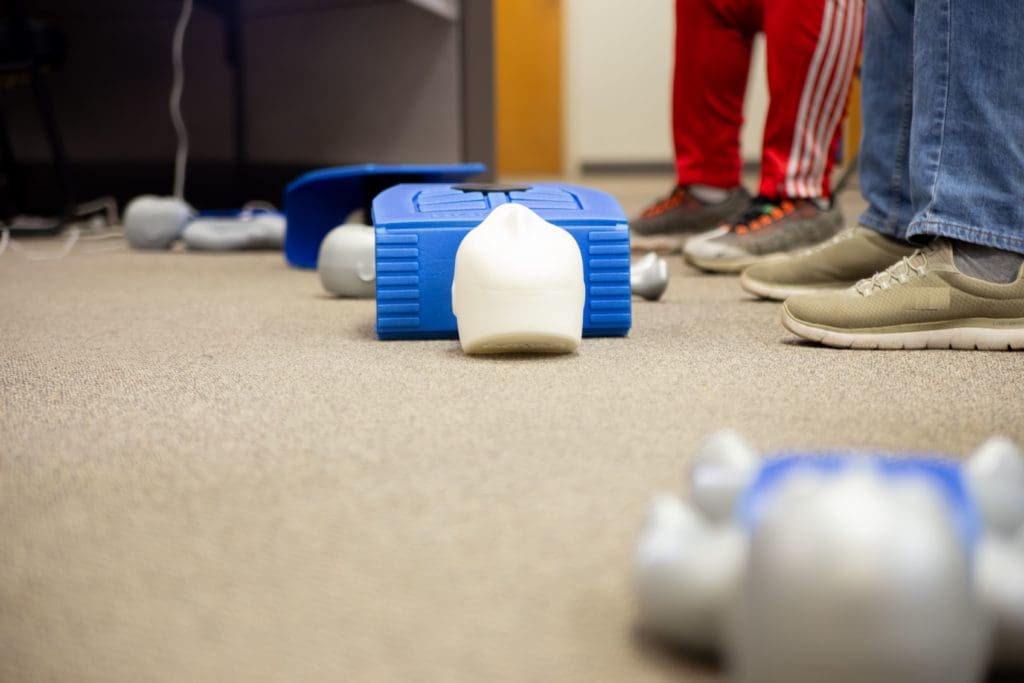
Brayden Baby Like the adult, Brayden Baby uses lights to reinforce compression and ventilation performance. I have seen students grasp the difference between gentle infant compressions and forceful adult compressions faster with Brayden’s visual pathway. As with the adult, plan your spare parts ahead of peak training months.
Budget options that still do the job
Actar 911 and similar lightweight torsos continue to serve community programs that need quantity over features. The torsos stack, weigh very little, and the per-unit cost can be a fraction of premium systems. You give up nuanced feedback, and chest feel is basic. One successful approach is a hybrid classroom: two or three premium QCPR torsos for calibration and testing, with budget torsos for repetition and muscle memory.
If you take this route, structure drills so every student rotates through a feedback-equipped station at least twice per class, first early to set targets, then near the end to confirm skill.
Comparing popular adult models at a glance
| Model | Typical use-case | Feedback style | Consumables availability in Canada | Approx. Unit cost (CAD) | | --- | --- | --- | --- | --- | | Prestan Professional Adult (with feedback) | Mobile instructors, high throughput | Clicker, light pod, some app variants | Excellent across distributors | 320 to 520 in bundles | | Laerdal Little Anne QCPR | Fixed sites and mixed-skill groups | App-based metrics, indicator lights | Strong support via Laerdal Canada | 400 to 650 | | Brayden Pro Adult | Visual learners, physiology emphasis | LED perfusion path, some app support | Good, plan ahead for skins | 500 to 800 | | Ambu Man Basic/Wireless | Skills labs with ventilation focus | Ranges from basic to wireless logging | Available, at higher price | 700 to 1,300 | | Resusci Anne QCPR | Clinical programs and advanced courses | App or SimPad, detailed analytics | Strong, premium pricing | 1,000 to 1,600 |
Ranges reflect single-unit vs bundle pricing and exchange-rate swings as of 2026.
AED training equipment in Canada that pairs well
Quality CPR training needs an AED rhythm. For general first aid and workplace programs, a universal trainer with clear voice prompts in English and French works best. For professional audiences, a brand-specific trainer that mirrors the live device they will use on the job is worth the investment.
- Prestan AED UltraTrainer. Compact, durable, bilingual voice prompts, and easy-to-replace training pads. Scenarios are straightforward and map well to most public access AEDs. This unit pairs nicely with Prestan manikins, but it is not limited to them.
- Laerdal AED Trainer series. Reliable, with multi-language options and scenarios that cover shockable and non-shockable rhythms, pad placement errors, and motion artifacts. Good speaker clarity in larger rooms.
- ZOLL AED Plus Trainer2 and Philips HeartStart HS1 Trainer. If your clients will encounter those brands at work, matching trainers reduce the cognitive gap. The prompts mirror the live devices, which improves retention.
Replacement pads and batteries are widely available within Canada. Expect to replace training pads every 30 to 50 classes depending on how diligently students peel and place. If your AED trainers use proprietary batteries, keep a set of spares on your shelf; in winter, shipping delays can be a week longer than you planned.
https://pastelink.net/xbpgsvijBuilding coherent CPR instructor packages in Canada
The most reliable “CPR instructor packages Canada” combine a family of manikins with a universal AED trainer and a cache of consumables. A well-structured kit for a 10-person class typically includes 4 adult torsos, 2 infant torsos, an AED trainer with two sets of reusable training pads, at least 60 lungs or valves, 50 barrier masks or face shields, alcohol wipes, nitrile gloves, and a carry bag that unzips fully to serve as a mat. Good bundles often include bilingual quick-start cards and training checklists that save you from reinventing your setup protocol every time.
When comparing bundles from Canadian distributors, look for shipping included to your province, a stated warranty in years rather than months, and written confirmation that all consumables are stocked domestically. For “Emergency training equipment Canada” searches, you will also see packages that add a choking trainer torso, bandage kits, and splints. These can be useful for blended first aid classes, but be wary of bundles padded with items that sit unused.
Cleaning, disinfection, and winter storage
Most manikins now ship latex free and tolerate common quaternary ammonium wipes and diluted bleach solutions, but always check the manufacturer’s list of compatible agents. After every heavy training day, I wipe external surfaces, swap lungs or valves, and air-dry torsos unzipped for at least 30 minutes before packing. If you travel, keep a small drying rack or mesh bag in your vehicle to keep used airways separate.
Canadian winters add a wrinkle. Plastic skins and chest plates stiffen in the cold. If you unload at a site after a two-hour drive at minus 15, bring the torsos inside first and start with an admin segment while they warm. Compressions on cold plastic can crack older skins, and clickers do not sound right until the springs acclimate. Conversely, high summer heat in a vehicle can warp face plates. I avoid leaving kits in cars for more than a few hours in July and August.
A maintenance checklist that prevents most surprises
- Before a training day: test feedback indicators, confirm app connections if used, and inspect faces for tears around the nose and mouth.
- After class: discard and replace lungs or one-way valves, wipe surfaces with approved disinfectant, and air-dry fully before packing.
- Weekly during heavy seasons: check chest springs for abnormal creaks, tighten loose screws where applicable, and inventory consumables.
- Quarterly: replace batteries in feedback pods and AED trainers preemptively, even if indicators show partial life.
- Annually: review manufacturer updates, order a bulk set of lungs, valves, and a spare face for each torso, and audit bags and zippers.
Following this cadence reduces emergency orders, which are where you lose both money and teaching time.
Accessibility, inclusivity, and teaching realities
Classrooms are mixed. You will have students with limited upper body strength, others with joint issues, and some who learn by sound or sight more than feel. Choose manikins that let you adjust spring tensions or at least provide a feedback alternative that is easy to read. For example, students who cannot hear a clicker well may rely on a shoulder light or an app’s green target zone. For students with visual impairments, clear tactile landmarks on the sternum matter more than LED bands.
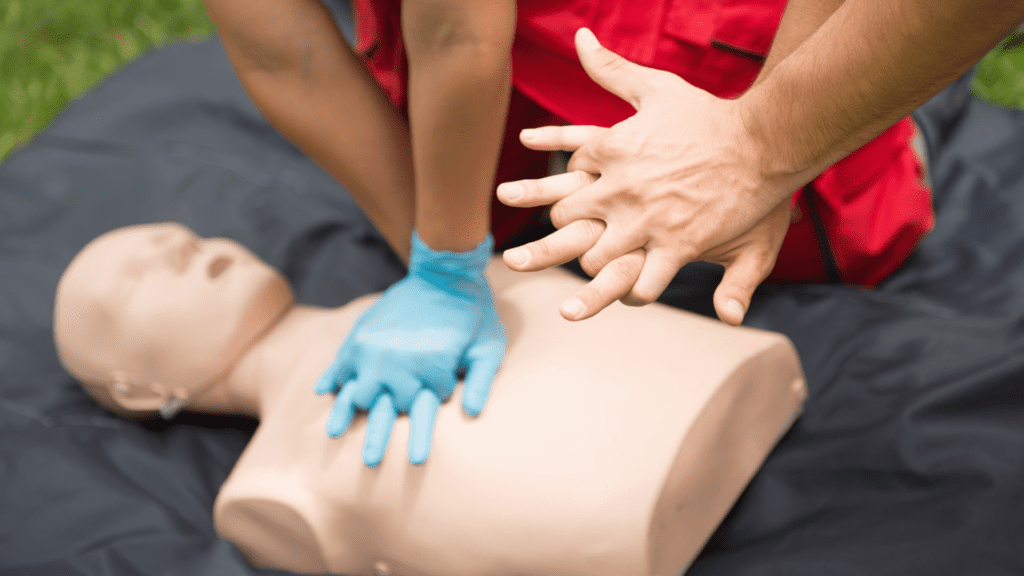
Another reality is face hair, makeup, and cultural considerations. Keep a supply of barrier masks and extra faces or easy-to-clean face plates so students can opt in without discomfort. Instructors who carry both adult and child masks speed transitions and reduce crowding at the table.
The cost picture: buy once, cry once, or buy smart twice
Programs often fixate on the unit price and forget that consumables and downtime carry weight too. A simple back-of-the-envelope example: a mid-tier torso at 480 CAD that uses 1 CAD lungs per student and lasts five years might beat a budget torso at 260 CAD with 2 CAD lungs that needs replacement faces annually. Conversely, if you run a small program with 60 students a year, premium analytics may never pay for themselves. In those cases, a mix of two mid-tier feedback torsos and two budget torsos can keep your per-student cost under 10 CAD including lungs and wipes.
When budgeting, include shipping, especially if you serve regions far from major hubs. Many vendors offer free shipping over certain thresholds within Ontario and Quebec, while Western Canada and Atlantic Canada sometimes see surcharges on bulky items.
How to vet a Canadian distributor
Stick with suppliers who publish realistic ship dates and have telephone support during Canadian business hours. Ask whether returns go to a Canadian address, not across the border, which can complicate warranties. Confirm that bilingual manuals are included. Finally, ask for a written list of consumable SKUs, so you can reorder exactly what fits your models without guesswork.
Pairing CPR and first aid training kits for blended courses
Most employers now combine CPR with first aid refreshers. If you are building a blended kit, add a choking trainer (adult and infant), a set of triangular bandages, assorted gauze and roller bandages, splints, nitrile gloves in multiple sizes, a penlight, and a simple blood pressure cuff and stethoscope set if your curriculum includes vitals. The “CPR and first aid training kits” marketed in Canada vary widely; check that the item list matches your syllabus rather than chasing a low sticker price that omits key tools.
Future-proofing for guideline updates
Guidelines evolve every five years or so. A reasonable hedge is to buy manikins whose feedback targets can be updated in software or that use generic targets like a chest light band, which accommodates modest changes in recommended compression rates. App-based systems usually get updates, though not forever. If a vendor has supported app updates for at least one full guideline cycle in the past, that is a good sign.
Recommended infant and AED trainer pairings at a glance
| Category | Option | Why it fits | Notes for Canada | | --- | --- | --- | --- | | Infant | Prestan Infant Professional | Durable, quick maintenance, pairs with adult set | Consumables easy to source; good for large classes | | Infant | Resusci Baby QCPR | High-fidelity chest, analytics, clinical focus | Higher cost, best for healthcare programs | | AED Trainer | Prestan AED UltraTrainer | Bilingual prompts, compact, value pricing | Pads last decently, easy replacement | | AED Trainer | Laerdal AED Trainer | Robust scenarios, clear audio | Good classroom volume, multi-language |
Again, these are not the only workable options, but they strike the balance most instructors need between performance and support in Canada.
Final buying advice from the training floor
Pick a lane that matches your student mix. Corporate and community classes value reliability, cleanliness, and simple feedback that builds confidence fast. Healthcare and academic audiences need realism and data. You can mix within a fleet, but consistency within each small group speeds instruction.
Budget for spares on day one. One extra adult face and a half-year supply of lungs or valves per torso keep you out of trouble. Add one spare set of AED training pads for every trainer.
Test before you scale. If you are overhauling a program, buy two candidates and run them through three full class days. Track setup time, cleaning time, student error rates, and feedback clarity. Small differences on paper become big differences with 20 students in the room.
Finally, remember that Canadian conditions reward equipment that tolerates travel, cold starts, and frequent wipedowns. The models outlined here have shown they can handle that reality. Build your kit around them, add AED training equipment Canada instructors trust, and you will spend your time teaching rather than troubleshooting.
CPR Depot Canada — Business Info (NAP)
Name: CPR Depot CanadaAddress: 340 Croft Dr, Tecumseh, ON N8N 2L9
Phone: +1-877-570-7322
Website: https://cpr-depot.ca/
Email: [email protected]
Hours:
Monday: 9:00 AM – 6:00 PM
Tuesday: 9:00 AM – 6:00 PM
Wednesday: 9:00 AM – 6:00 PM
Thursday: 9:00 AM – 6:00 PM
Friday: 9:00 AM – 6:00 PM
Saturday: Closed
Sunday: Closed
Open-location code (Plus Code): 8537+C8 Tecumseh, Ontario
Map/listing URL: https://www.google.com/maps/place/CPR+Depot/@42.3036,-82.8392601,17z/data=!3m1!4b1!4m6!3m5!1s0x883b2aedd5f271a1:0xfee6f8b7ab8f4110!8m2!3d42.3036!4d-82.8366852!16s%2Fg%2F1q6cff15h
Embed iframe:
Socials:
https://www.facebook.com/people/CPR-Depot-Inc/61575911496200/ https://www.instagram.com/cprdepotinc/ https://www.youtube.com/@CPRDepot
https://cpr-depot.ca/
CPR Depot Canada is a supplier of medical training products and related supplies serving customers across Canada.
The business is listed at 340 Croft Dr, Tecumseh, ON N8N 2L9.
To contact CPR Depot Canada, email [email protected] or call +1-877-570-7322.
Hours listed are Monday–Friday 9:00 AM–6:00 PM, with Saturday and Sunday closed.
For directions and listing details, use: https://www.google.com/maps/place/CPR+Depot/@42.3036,-82.8392601,17z/data=!3m1!4b1!4m6!3m5!1s0x883b2aedd5f271a1:0xfee6f8b7ab8f4110!8m2!3d42.3036!4d-82.8366852!16s%2Fg%2F1q6cff15h
Popular Questions About CPR Depot Canada
Where is CPR Depot Canada located?CPR Depot Canada is listed at 340 Croft Dr, Tecumseh, ON N8N 2L9.
What are the hours for CPR Depot Canada?
Hours listed: Monday–Friday 9:00 AM–6:00 PM; Saturday and Sunday closed.
What does CPR Depot Canada sell or provide?
CPR Depot Canada supplies medical and first aid training products and related equipment (product availability varies).
Do they ship across Canada?
The business markets to Canadian customers and operates as a Canada-wide supplier; confirm shipping options at checkout or by contacting [email protected].
How can I contact CPR Depot Canada?
Phone: +1-877-570-7322
Email: [email protected]
Website: https://cpr-depot.ca/
Map: https://www.google.com/maps/place/CPR+Depot/@42.3036,-82.8392601,17z/data=!3m1!4b1!4m6!3m5!1s0x883b2aedd5f271a1:0xfee6f8b7ab8f4110!8m2!3d42.3036!4d-82.8366852!16s%2Fg%2F1q6cff15h
Landmarks Near Tecumseh, ON
1) Tecumseh Town Hall2) Lacasse Park
3) Lakewood Park
4) WFCU Centre (Windsor)
5) Devonshire Mall (Windsor)